Thinking about buying a two- or three-family home in Hyde Park so your tenants can help cover the mortgage? You are not alone. For many buyers, house hacking can be one of the most practical ways to break into Boston-area real estate while building long-term equity. In this guide, you will learn how house hacking works in Hyde Park, what the numbers can look like, which financing options may fit, and what landlord rules you need to plan for before you buy. Let’s dive in.
Why Hyde Park Works for House Hacking
Hyde Park offers a mix of housing types that can make multi-family living feel more realistic than in some other parts of Boston. According to Boston Planning’s Hyde Park neighborhood overview, the area includes historic buildings, mid-twentieth-century single-family homes, commercial corridors along Hyde Park Avenue, River Street, and Fairmount Avenue, and commuter rail access on the Fairmount and Providence lines.
That combination matters if you want a home that can serve both as your residence and an income-producing property. Hyde Park also appears to have relatively stable occupancy. Boston Planning notes that 89% of residents lived in the same housing unit one year ago, which can be a useful sign of consistency for buyers evaluating a neighborhood for long-term ownership.
What House Hacking Means
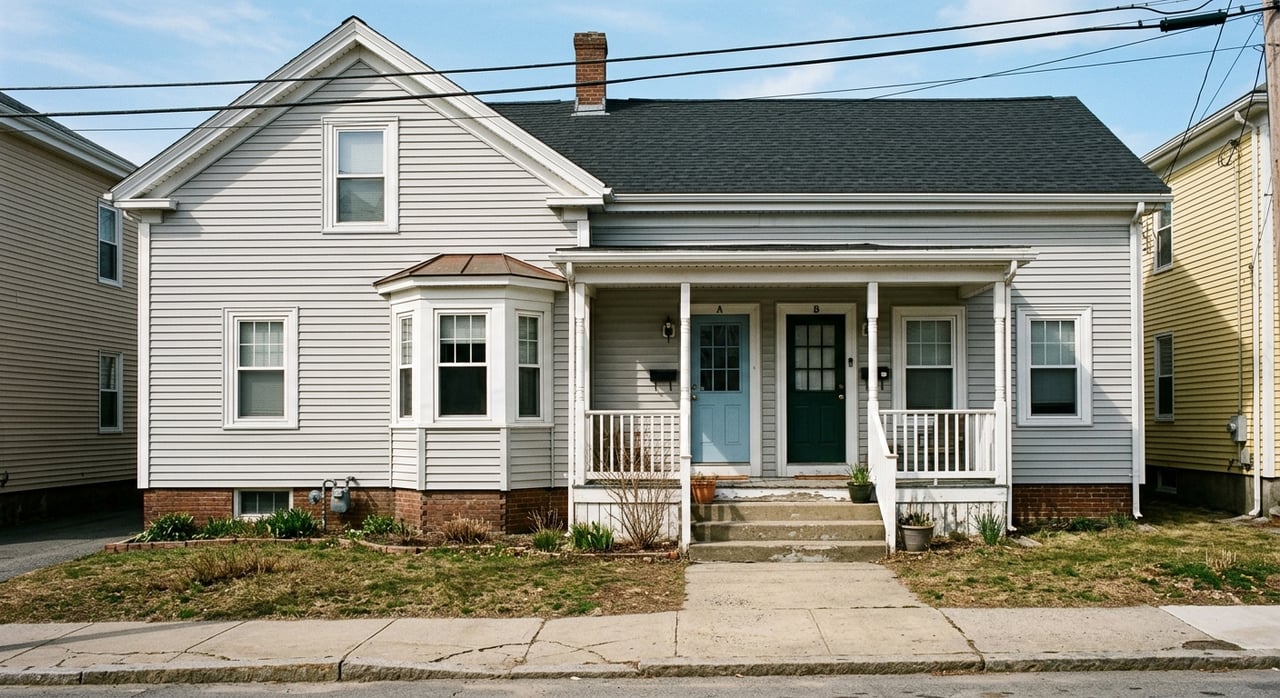
House hacking usually means buying a property, living in one unit, and renting out the others. In a two-family, you would occupy one unit and lease the second. In a three-family, you would live in one unit and rent the other two.
The goal is simple: use rental income to offset your monthly housing costs. Instead of carrying the full payment on your own, you may be able to reduce your out-of-pocket cost while gaining experience as an owner-occupant landlord.
Hyde Park Price and Rent Benchmarks
Before you start touring properties, it helps to understand the local pricing picture. In March 2026, Zillow reported Hyde Park’s home value index at about $634,926, while separate market reporting cited in the research placed the median sale price around $655,000.
On the rental side, current benchmarks suggest meaningful income potential. Apartments.com rent trends for Hyde Park showed an April 2026 average rent of $2,501 overall, with a 2-bedroom average of $2,713 and a 3-bedroom average of $5,249. A separate Boston.com report citing ApartmentAdvisor data placed Hyde Park’s 2-bedroom average at $2,625 in early 2025.
Because rent data changes by source and timing, it is smart to use a range rather than one fixed number. For planning purposes, a Hyde Park 2-bedroom rent benchmark of roughly $2,625 to $2,713 per month is a grounded starting point based on the research provided.
What the Rent Offset Could Look Like
This is where house hacking gets interesting. If you buy a two-family and rent one 2-bedroom unit, that rent could bring in roughly $2,625 to $2,713 per month in gross income based on current neighborhood benchmarks.
If you buy a three-family and rent two 2-bedroom units, the gross rent could be about $5,250 to $5,426 per month using the same range. That does not equal profit, and it does not account for vacancies, maintenance, taxes, insurance, or utilities. Still, it shows why a multi-family purchase can be appealing if you want help carrying the monthly cost.
Financing Options to Know
One of the biggest advantages of owner-occupied house hacking is that you may have access to financing programs that are not available for non-owner investment purchases. That can lower the barrier to entry.
FHA for 2- to 4-Unit Homes
According to HUD, FHA-insured mortgages can be used for 2- to 4-unit properties, and the minimum required investment can be as low as 3.5%. For many first-time buyers, that is one of the first loan paths worth exploring.
The key detail is occupancy. You generally need to buy the property as your primary residence, which aligns with the house-hacking model of living in one unit and renting the others.
Conventional Options With Rental Income
Freddie Mac also allows financing for 2- to 4-unit owner-occupied primary residences. Per HUD’s summary in the research, rental income from the other units may be counted toward qualifying, which can strengthen your buying power depending on the lender’s underwriting standards.
Freddie Mac’s Home Possible product may allow down payments as low as 3% for eligible borrowers with income up to 80% of area median income. If you are comparing monthly payments and qualification standards, this is a strong option to review with a lender.
MassHousing Programs
For buyers in Massachusetts, MassHousing is another resource worth checking. The agency states that its mortgage programs can be used to buy a single-family home, condo, or 2- to 4-family property, and its down payment assistance program is available for eligible buyers purchasing a primary-residence 2- to 4-family home.
That local angle can matter if you are trying to preserve cash for repairs, reserves, or move-in updates after closing. A good financing strategy is not just about getting approved. It is also about staying financially comfortable once you own the property.
Loan Limits in Suffolk County
Loan size matters when you shop multi-family homes. For 2026, the FHFA conforming loan limits for Suffolk County are $1,232,250 for a 2-unit property and $1,489,500 for a 3-unit property.
Those limits sit well above the current Hyde Park median pricing benchmarks in the research. That suggests many duplexes and triplexes in Hyde Park may still fit within conventional loan territory, though lender-specific approval will always depend on your credit, income, reserves, debt levels, and the property itself.
Property Taxes and Owner-Occupant Savings
When you run the numbers, do not skip taxes. Boston’s FY2026 residential tax rate is $12.40 per $1,000 of assessed value.
Using the $655,000 valuation benchmark from the research, the raw annual tax bill would be about $8,122 before any exemption. Boston also states that qualified owner-occupants may receive the residential exemption, which saved up to $4,353.74 in FY2026. If you plan to live in one unit, that exemption could be an important part of your overall affordability picture.
Costs Beyond the Mortgage
House hacking can lower your net housing cost, but it does not eliminate the realities of ownership. Your monthly and annual budget should account for more than principal and interest.
Be sure to plan for:
- Property taxes
- Homeowners insurance
- Repairs and routine maintenance
- Vacancy periods
- Utility costs, if any are owner-paid
- Registration and compliance costs
- Cash reserves for unexpected issues
A property may look affordable on paper if you only subtract rent from the mortgage. A stronger analysis looks at the full carrying cost.
Boston Rental Registration Rules
If you buy a multi-family and rent out one or more units, you will need to follow Boston’s rental property rules. The city requires rental properties to be registered every year, with renewal by July 1.
According to Boston’s rental registration guidance, first-time registration costs $25 per unit and renewals cost $15 per unit, subject to city caps. Boston also states that rental properties are inspected at least once every five years. That means compliance is not optional. It is part of responsible ownership.
Massachusetts Deposit Rules
Massachusetts has specific rules for collecting and holding tenant funds. Under state security deposit law, a security deposit cannot exceed one month’s rent and must be kept in a separate interest-bearing Massachusetts account.
The state also generally requires return of the deposit within 30 days after the tenancy ends. If you collect last month’s rent, interest rules apply there too. These are the kinds of details that first-time landlords need to understand before they hand over a lease.
Lead Paint and Safety Compliance
Many Boston-area homes were built before 1978, so lead compliance can be a real issue in a house-hack purchase. Massachusetts requires owners to provide tenant lead law notification before renting a pre-1978 home.
State law also requires lead hazards to be removed or covered when a child under 6 lives in the home. In addition, landlords must install and maintain carbon monoxide alarms in dwelling units with a carbon monoxide source. When you evaluate a property, these items should be part of your due diligence, not an afterthought.
Fair Housing and Screening Basics
Tenant screening needs to be consistent, objective, and compliant with fair housing law. According to Massachusetts fair housing guidance, discrimination is prohibited based on protected classes, including source of income.
A safer approach is to use written screening standards and apply them evenly to every applicant. That helps you stay organized, reduce risk, and create a more professional rental process from day one.
How to Evaluate a Hyde Park Multi-Family
Not every two- or three-family is a good house-hack candidate. The right property is not just about purchase price. It is about layout, condition, monthly carrying cost, and realistic rental potential.
As you compare options in Hyde Park, focus on:
- Whether one unit works comfortably as your own residence
- Bedroom count and likely rent range based on neighborhood benchmarks
- Condition of major systems and likely repair needs
- Whether utilities are separate or shared
- Owner-occupant tax exemption potential
- Compliance issues tied to lead, alarms, and rental registration
- How much cash you will still have after closing
A clean-looking property is not always the best buy. Sometimes the smarter move is the one with stronger numbers, fewer deferred maintenance issues, and a layout that supports long-term flexibility.
Why Guidance Matters in a House Hack Purchase
Buying a multi-family is different from buying a typical single-family home or condo. You are evaluating your future home, a financial asset, and a regulated rental property at the same time.
That means your agent should help you think through more than just the offer price. You want support on local value, realistic rent assumptions, financing strategy, inspection priorities, and the practical details that can affect your ownership experience after closing.
If you are considering house hacking a two- or three-family in Hyde Park, working with an experienced local broker can help you compare options with a clear head and a solid plan. Kristen Meleedy offers high-touch guidance for buyers navigating multi-unit opportunities, from property search through negotiation and closing.
FAQs
What is house hacking in a Hyde Park two-family home?
- House hacking in a Hyde Park two-family home usually means you live in one unit as your primary residence and rent out the other unit to help offset your monthly housing costs.
Can you use FHA financing for a Hyde Park three-family property?
- Yes. HUD states that FHA-insured mortgages can be used for 2- to 4-unit properties, and eligible buyers may qualify with a minimum required investment as low as 3.5% if the property will be owner-occupied.
What rent can you expect from a Hyde Park 2-bedroom unit?
- Based on the research provided, a reasonable benchmark for a Hyde Park 2-bedroom unit is roughly $2,625 to $2,713 per month, though actual rent depends on condition, layout, and timing.
Are Hyde Park multi-family homes subject to Boston rental registration?
- Yes. Boston requires rental properties to be registered annually, with renewal by July 1, and the city states that rental properties are inspected at least once every five years.
Do Hyde Park landlords need to follow Massachusetts security deposit rules?
- Yes. Massachusetts limits security deposits to no more than one month’s rent and requires the funds to be held in a separate interest-bearing Massachusetts account, with additional rules on handling and return.
Should you check for lead paint issues before buying a Hyde Park multi-family?
- Yes. If the property was built before 1978, Massachusetts requires tenant lead-law notification before renting, and lead hazards must be addressed when a child under 6 lives in the home.